
Responsibility
On What We Take In, What We Carry, and What We Set Down

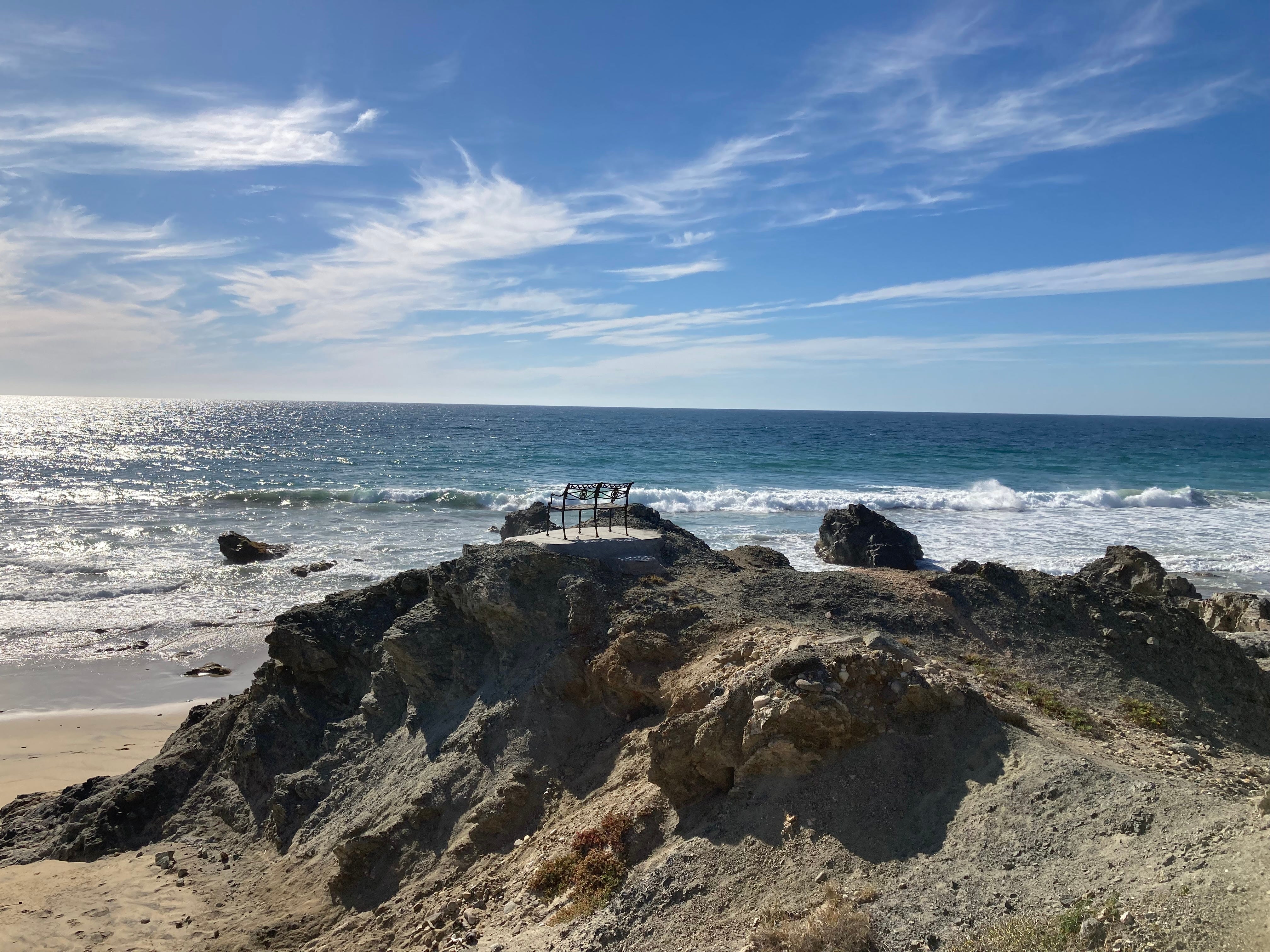
My journey to Spain is just a few weeks away and my mind is racing with lists. I’m thinking about foot care and the things I’ll need to keep my body walking 10 to 15 miles a day. I’m quite certain I’m over-purchasing.
I have six days’ worth of Gu energy gummies, countless pairs of socks, three pairs of walking shoes, and rain gear. The list goes on. But it feels like no matter how much planning I do, there’s one more thing I should consider. It’s silly, I know, but this is the way my brain operates.
I have a deeply ingrained sense of responsibility.
I think it started on the day Daddy died. When a well-intentioned adult — or two, or five — told me I had to be brave. Told me I was now responsible for my mother. I took that seed of responsibility into my body.
It was virtually impossible to be responsible for my mother. I was 11 years old. I didn’t know the first thing about being a mother. I was desperately afraid of disappointing her though, of doing anything that would drive her away, leave us orphaned. So even though planted in impossibly barren soil, the seed of responsibility took root. It sprouted a thousand thorny weeds that pricked at my heart and made it race. That made me race.
I can’t remember what I did well during that time, but I sure do remember the failures. Sometimes my job was as simple as defrosting a chicken so when my mother got home from work, she could just throw it in the oven. I forgot to take food out of the freezer more than once. I felt my mother’s disappointment like a punch to the gut. She must have been exhausted, grieving, overwhelmed.
But I was responsible for her, and I was failing. My failures became me. I was a failure.
Psychologists call this parentification, when a child absorbs the emotional weight that belongs to adults. It’s more common than you’d think, and it leaves a specific stain: your worth becomes tied to your performance. You are only as good as your last defrosted chicken.
I remember once not doing a great job at something — a cringy piano recital, or a fall during a figure skating competition. I cried to my mother, who tried to reassure me by saying, “Not everyone can be great. It’s okay to be average.” It wasn’t okay.
Over time, being a failure became a habit, a powerful one. The way it worked was this: I would set my sights on some goal or another, fail to meet it, and the gremlin that lived inside me would say, See? You’re a failure. You’re not very good. You don’t have permission to claim anything.
Even after I left home to begin my adult life, the gremlin came along. Again and again I’d aim high, and again and again the gremlin would sabotage me, always evoking the same message: You’re irresponsible. You don’t deserve this.
I didn’t understand that the gremlin was a survival strategy. When you grow up in a house where the emotional weather is unpredictable, your nervous system learns to stay on guard. If I could figure out what I did wrong, I might be able to prevent the next bad thing. Self-blame feels terrible, but it’s preferable to helplessness. At least it gives you the illusion of control.
My gremlin is downright laughable. I mean, I was a registered nurse. I went to law school. I worked full-time as a lawyer while raising two children, managing a house, and volunteering in my community.
But my gremlin didn’t care. It still denied me permission. It still woke me up at three in the morning to remind me I had forgotten to send a birthday card.
It’s a mean gremlin.
The other side of the responsibility coin was an escape hatch. A door I’d been sprinting through my whole life. Through the door was sweet escape, whether into adventure, or a thrill, or even oblivion.
A few months after my cancer diagnosis, I was in Hawaii with my husband and our kids. My daughter and I went for a walk along the coast. I wandered out onto the rocks to peer down at the sea life below, fully absorbed while the waves crashed around me. I heard her calling me, “Mom, come back! Please!!” I smiled and scrambled back to the shore, unbothered.
When we resumed our walk, she said something I’ve never forgotten. She told me she thought of me as reckless. I was stunned. I had raised her, after all, hadn’t I?
But she wasn’t wrong. I was chronically late for everything, racing those poor girls through airports — and through life. On a diving trip, I became so entranced by a pod of dolphins that I started swimming off with them, and had to be yanked back by the divemaster.
On Roatan island, we swam with non-captive dolphins at a research sanctuary. A baby came up to me, playful, and I started to play back. Its mother bumped me, gently at first. I thought she wanted to play too, until she put her teeth on my arm. Then I got the message. I looked up and saw my thirteen-year-old daughter, wide-eyed and terrified.
In Alaska, I simply walked away from our group. I needed quiet. Solitude. The guide came running. There are bears in Alaska, and I was his responsibility — a concept I apparently applied selectively.
I wasn’t reckless, exactly. Or rather, I was reckless in one direction and suffocatingly responsible in another.
Psychologists say this behavior is two sides of the same coin. When you grow up in a house where the emotional weather is unpredictable, your nervous system gets calibrated to intensity. Some people respond by staying hypervigilant — always scanning, always managing.
Others become escapists, thrill-seekers and avoiders. To them, ordinary life feels flat. Adrenaline, whether from adventure, or risk, or even a fight, briefly makes everything feel right-sized.
Responsibility builds pressure. Escape releases it.
If any of this sounds familiar — the lists, the 3AM reckonings, the guilt that finds you even in your grief — you probably didn’t choose your wiring either. It was shaped for you by things that happened before you were old enough to protect yourself.
When I got a cancer diagnosis, the gremlin grew into a monster. The monster said cancer was my fault.
It reminded me of the decade we had our house sprayed monthly to keep armies of ants from crawling through windows and swarming our kitchen counters, dresser drawers, and bathroom sinks.
It reminded me that I had used plastic Tupperware instead of glass. That I drank too much alcohol, ate too many sweets and chips. That I had given up my yoga practice. That I wasn’t mindful enough. That I carried too much stress. Of course, stress was my fault.
That diatribe persisted until I was just too sick, too unwell, to engage with my gremlin anymore. When I couldn’t get off the sofa, there wasn’t much I could do, even if I had responsibilities. And if I’m honest, really honest, those periods were a relief. There was something nice about being stripped of responsibility, being off the hook.
I remember once, not long after I graduated from college, my grandmother sent me to Europe. One day, I was at the top of a small mountain in Switzerland. It was sunny and warm. The fields were green and speckled with wildflowers. There were cows all around with giant cowbells around their necks. And it dawned on me that no one knew where I was. I was responsible to no one. I can still remember the magical lightness of that awareness. Pure escape. Pure delight.
So when I was really, really sick, there was a component of relief to the experience. A component of just checking out. The gremlin went to sleep.
I’m better now. I’m arguably in remission. And the gremlin is awake.
I carry a deep sense of responsibility for the dozens of hummingbirds that flock to our feeder, and for the birds I feed in the backyard, and for the deer for whom I leave water out, and for all my plants. I feel a deep sense of responsibility for Reba, the horse I sponsor, and for my dog, Bonnie.
Lucy was my soul dog. She was only nine years old when she died from seizures. It was traumatic. Leo, my other dog, died six months later, perhaps of a broken heart. He simply gave up.
Bonnie came into our lives at eleven weeks old, before I was ready, when the grief of losing Lucy was still raw. My gremlin has whispered more than once that her arrival pushed dear Leo right over the edge. My fault.
I would do anything for Bonnie. Anything. I make her food and bone broth from scratch.
I’m getting ready to go on a trip. I’ve made it okay because it’s a fundraiser — so not purely selfish — but I’m leaving behind my husband, who is not as independent as he once was. I’m walking away from Reba and Bonnie and the hummingbirds and the sparrows and the plants and everyone I feel responsible for.
I am ambivalent.
But when I close my eyes, I picture myself walking the Camino de Santiago, on the trail where millions of pilgrims have ventured for thousands of years. I see relief. I’ll be responsible only to myself, putting one foot in front of the other, all day for six days.
and I’m still waiting for permission,
If you feel moved to support Health Tree’s research and patient education programs, here is a link to my fundraising page.
I appreciate your writing this so much. It helps me feel a little less dysfunctional and alone. You see, I have a gremlin too. At a very young age, I was diagnosed with childhood asthma. My parents had to work around my allergies, and my siblings--who were very young themselves--resented the energy and time and accommodations keeping me healthy required. On top of that, my parents had a terrible marriage. Constant arguing and fighting. And so, between the marriage, the sibling resentment, and the asthma itself, my gremlin emerged. It continually told me contemptuously that I was weak not just physically weak but also emotionally. I grew up almost constantly on guard: waiting for an asthma attack, for my parents to fight, for my overall weaknesses to reveal itself. It's easy for me to be hypervigilant even now, decades after those experiences. Now I worry about my wife, children, work, money, growing older. So often I look for something bad to happen, trying to be ready the same way I tried as a child.
I don't have any magic answers. I've been in therapy before and am again, and I think it's helping. I don't know if or when my gremlin will go away. He doesn't visit as often, but I'm hoping, like you, to learn to take more leaps, even if it means just one small step. I hope you are proud of yourself for even attempting the Camino. I hope you find strength in yourself that you've never realized you had. And I hope you will see qualities in yourself, as you engage in new experiences, that you didn't know you had. I would say "good luck," but I don't think you're going to need. I hope you'll be proud of yourself too.
Excellent!